|
Cuba
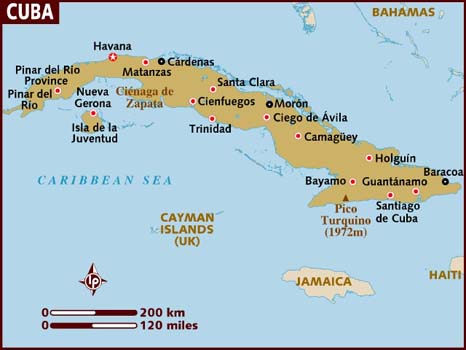
Introduction The socialist Republic of Cuba is the largest island in the Caribbean and was created following the revolution of 1953-59. The population of 11 million is of mixed descendancy including the original native Taíno and Ciboney, african slaves, Spanish and Americans. The country is run on socialist principles in all sectors of its society, including the economy, education and healthcare. It has almost 100% literacy rate and is proud of its performance in sustainable development and green issues. |
 |
|
|
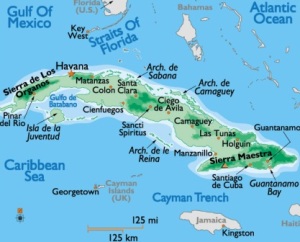
Geography There is the main island of Cuba itself and another fairly large island, Isla de la Juventud and 4 clusters of small islands around these main ones. Cuba has the largest city of Havana in the north, and the second largest city and capital, Santiago de Cuba, in the south. The land is mainly flat or undulating plains except for the Sierra Maestra mountains in the south. The climate is tropical but cooled by the ocean winds, giving average winter temperatures of 21C and summer of 27C. Hurricanes are fairly common due to the high temperatures and proximity to the Gulf of Mexico. |
 |
|
Economy The socialist state runs a planned economy, although in recent years the private sector has been allowed to grow to 25%. Cuba used to be the world`s largest supplier of sugar, but this has drastically reduced in recent years through lower commodity prices and lack of investment. It has still has some of the largest deposits of nickel and cobalt in the world. Other major exports include cigars, coffee, fish, citrus and medical products. Despite once having a significant cattle industry, 80% of food requirements are imported, along with clothes, capital goods and fuel. Although recent oil and gas finds will reduce the needs for fuel in the future. |
 |
|
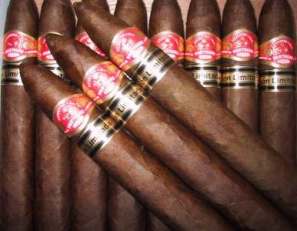
Cuban cigars .Cuban cigars are still regarded as some of the best in the world even though they have quality competition from other countries. Certainly the widespread growing of tobacco leaves in the island created the long tradition of fine cigar making. Excellent growing conditions are provided by the ideal temperature and humidity of the island. This climate together with good soil creates a strong and full-bodied tobacco with spicy and aromatic flavours. The leaves are chosen for the wrapper, filler and binder to ensure they complement each other perfectly. Many are still hand rolled by expert Torcedores who are highly respected in Cuban society for their skills. Despite the US embargo, Cuba still manage to export over 50 million cigars annually to the rest of the world. |
 |
Another cigar producing country like Cuba |
Copyright © and TM 2007-2024 fun-learning-spanish.com |